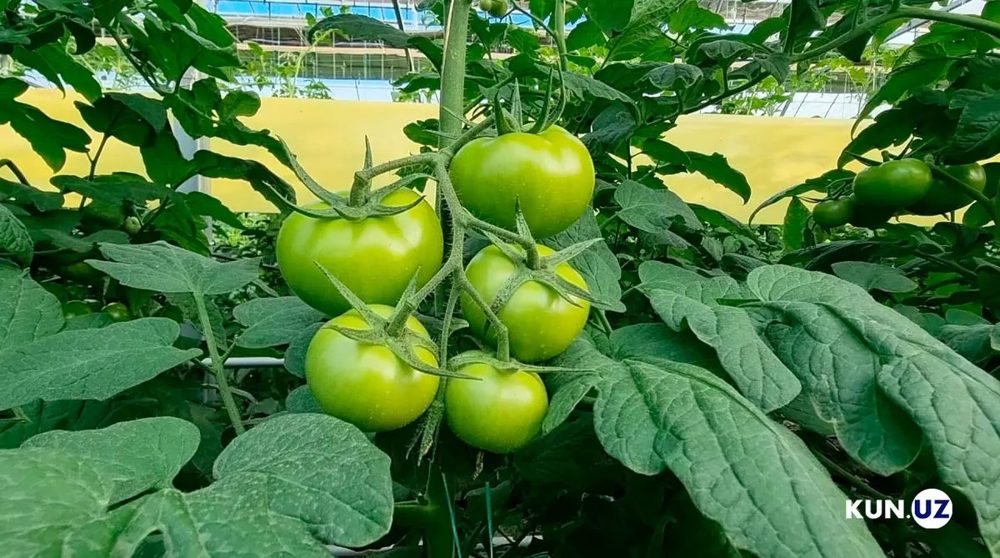
A presidential resolution of 13 October 2026, on additional measures to develop greenhouse farming with advanced “green” technologies and make better use of household land, was published on 14 October. It ties new support for greenhouses to cleaner, more efficient heating.
Half the winter electricity bill
From 1 November 2026 to 1 April 2030, greenhouses that use heat-saving covers or energy-efficient “green” heating will have 50% of the cost of the electricity they use from October to March covered by a subsidy. The resolution names four kinds of green heating: heat pumps, geothermal heating systems, solar heating systems and high-efficiency electric heating.
Help for household greenhouses
In five districts of Tashkent region (Tashkent, Zangiota, Qibray, Yangiyo‘l and Yuqori Chirchiq), the National Energy Efficiency Agency will cover 40% of the cost of buying and installing solar panels, heat pumps, infrared heaters and other energy-saving equipment for household greenhouses, up to 100 million soums, as a one-time subsidy until 1 January 2030.
The Poverty Reduction Fund will provide up to 200 million soums per family in 50 greenhouse-focused mahallas of Tashkent region. The Central Bank will pilot preferential loans for families: up to 300 million soums to build a new green greenhouse and up to 150 million soums to upgrade an existing one.
Tax breaks
Agricultural producers get a 0% VAT rate and a 0% profit tax rate on profit from selling their own products; fish farms also get the profit tax rate. Businesses that earn at least 60% of their income from greenhouses pay 1% social tax from 1 January 2026 to 1 January 2029, and legal entities among them pay half the usual land and property tax from 1 January 2027 to 1 January 2030.
Cleaner air around Tashkent
The same day, the President reviewed proposals for a special environmental regime for greenhouses in Tashkent and five neighbouring districts, where weak winds and temperature inversions in autumn and winter trap emissions near the capital. Under the proposals, greenhouses burning solid fuel would switch to natural gas, electricity, geothermal, solar or waste heat from thermal power plants by 1 December 2026, with subsidies of up to 50 million soums per hectare and preferential loans of up to 3 billion soums over seven years. These measures were presented as proposals; the resolution above is already signed.
Why it matters
The resolution names heat pumps and geothermal heating directly, so growers who use ground heat get the same support as other clean options. Greenhouses are one of the oldest uses of geothermal heat in Uzbekistan: many were built on hydrothermal water in the 1970s and 80s.