The heat beneath Uzbekistan
News, research and projects on geothermal energy in Uzbekistan, each linked to its public source.
Latest news
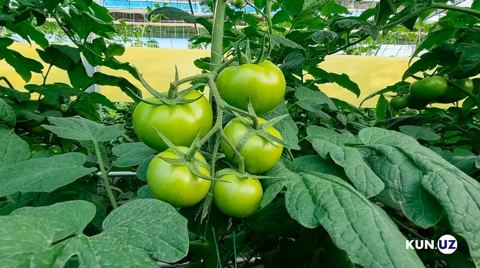
Greenhouses that heat with heat pumps or geothermal energy get half their winter power bill covered
A presidential decree signed on 13 October pays 50% of October–March electricity costs for greenhouses with green heating from 1 November 2026, alongside equipment grants, cheap loans and tax breaks.
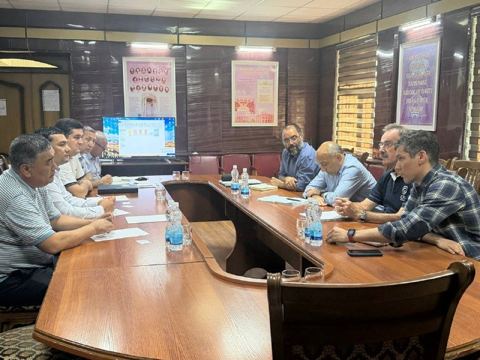
French and Uzbek geologists study the Fergana Valley’s geothermal potential
BRGM and Expertise France met the Institute of Hydrogeology in Tashkent, and BRGM and University of Geological Sciences geologists met Uzbekgeofizika’s Fergana Geophysical Expedition, to look at deep geothermal resources near Fergana, Kokand, Andijan and Namangan.
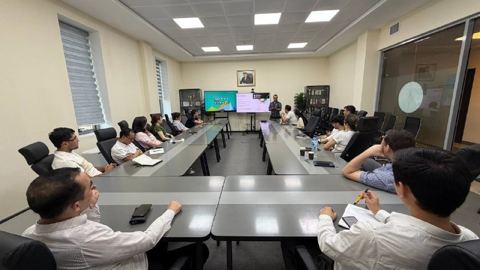
A BRGM hydrogeologist trains specialists at Uzbekistan’s Institute of Hydrogeology
BRGM researcher Ivan Osorio-Leon gave lectures and practical sessions on groundwater and water-resource management at the institute in Tashkent.
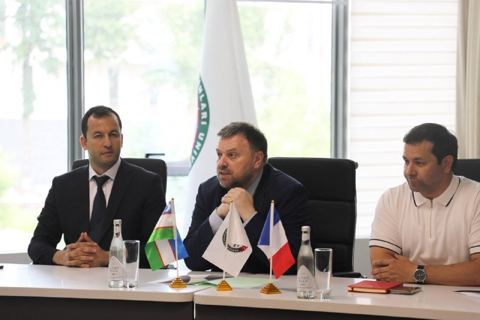
BRGM returns to the University of Geological Sciences as an EU raw-materials project starts
A BRGM delegation met the university’s leadership, gave seminars with the University of Lorraine on metals for the energy transition, and joined the launch of the EU–Uzbekistan DATA4CRM project.
Where the heat is
Thermal water sites, basins, survey areas and projects named in public research and news. Select a place to learn more, or zoom in on a region.
Talks and institutions
Tashkent
Where the IGA met Uzbekneftegaz and the Ministry of Mining Industry and Geology in September 2025. Home to the Institute of Geology and Geophysics, the Institute HYDROENGEO and the University of Geological Sciences, which BRGM experts have visited several times since 2025.
Thermal water sites, by water temperature
- Under 30 °C
- 30–45 °C
- 45–60 °C
- 60 °C and above
Projects and research
- Resource area
- Research site
- Project
- Talks and institutions
Heat flow. Mapped heat flow over most of Uzbekistan is about 60–75 mW/m². It is lower around Tashkent and rises above 80 mW/m² in parts of the Fergana Valley and in Surkhandarya near Termez. Source: Zui, Andreyev & Rakhmatullayev (2020). Heat flow of Uzbekistan: geology and interpretation. Journal of the Belarusian State University. Geography and Geology, 1, 95–105. Pins are placed from published coordinates; location precision is graded A (published GPS position), B (facility pin on an online map) or C (approximate).
All 31 thermal water sites as a table
| No. | Site | Region | Temperature | Depth | Location |
|---|---|---|---|---|---|
| 1 | Tashkent city | 44–47 °C (bath and drinking water); 51 °C (operator site) | 1,530–1,600 m | B | |
| 2 | Tashkent city | 22–40 °C | 1,544 m | B | |
| 3 | Tashkent city | 48 °C (bath); 35 °C (drinking) | 1,820 m | B | |
| 4 | Tashkent region | 57 °C at discovery (1952); 37–40 °C today | 1,371 m | C | |
| 5 | Tashkent region | 49–52 °C | 1,300 m | C | |
| 6 | Tashkent region | 74–78 °C | 1,780 m | B | |
| 7 | Tashkent region | 35–55 °C | 1,960 m | A | |
| 8 | Tashkent region | 40–45 °C | 1,820 m | B | |
| 9 | Tashkent region | about 48 °C at the wellhead | 1,400 m | B | |
| 10 | Tashkent region | 36–36.7 °C, constant year-round | Spring | C | |
| 11 | Syrdarya region | 31 °C | 1,620 m | B | |
| 12 | Fergana region | 37–42 °C; 41 °C from the 1,756 m well | 1,756 m | B | |
| 13 | Fergana region | 23–25 °C (bath); 20 °C (drinking, 1,650 m) | 506 and 669 m | B | |
| 14 | Fergana region | 36 °C | – | C | |
| 15 | Namangan region | 42–47 °C (wells 2 and 5); 44 °C (bath); 40–60 °C (well 1); up to 72 °C | 1,229–1,624 m | A | |
| 16 | Namangan region | 24–32 °C | 507 m | A | |
| 17 | Namangan region | 50 °C | 1,300 m | C | |
| 18 | Namangan region | 23 °C | 450 m | C | |
| 19 | Namangan region | 22–27 °C | Spring | C | |
| 20 | Andijan region | 18–40 °C | – | C | |
| 21 | Samarkand region | 37–43 °C | 650 m | A | |
| 22 | Navoi region | 64–70 °C | 135–300 m | C | |
| 23 | Bukhara region | 40–42 °C (bath); 50–52 °C (drinking) | 40 m (bath); 1,100 m (drinking) | A | |
| 24 | Kashkadarya region | 37–38 °C (bath) | 1,350 m | C | |
| 25 | Surkhandarya region | 30–40 °C (H₂S water); 37–38 °C (iodine–bromine water) | 234 m; 390–432 m | C | |
| 26 | Surkhandarya region | 40 °C | 1,050.5 m | C | |
| 27 | Surkhandarya region | 76 °C (1979); 72 °C (2016) at the wellhead | – | C | |
| 28 | Surkhandarya region | 39–40 °C | – | C | |
| 29 | Surkhandarya region | 25 °C | – | C | |
| 30 | Surkhandarya region | 30–31 °C | Spring | C | |
| 31 | Khorezm region | 22 °C | 700 m | C |
40 prospective geothermal water fields, by region
| Region | Field or site | Water temperature, °C | Mineralisation, g/l |
|---|---|---|---|
| Andijan region | South Alamishik | 45 | 14 |
| Sufikishlok | 42 | 1.5–3 | |
| Khojaabad | 40 | 4 | |
| Marhamat | 33 | 118–133 | |
| Palvantash | 31–32 | 239.8 | |
| Bukhara region | Umid | 92 | 90–130 |
| Jurun-Bolo | 53–63 | 1.6 | |
| Juizar | 53–54 | 1.3 | |
| Sitorai-Mohi-Hosa | 46–47 | 3.2–3.4 | |
| Bukhara | 46 | 2.8 | |
| Karakul site | 20–24 | 10.99–13.6 | |
| Jizzakh region | Gallaaral | 20–22 | 2.85 |
| Kashkadarya region | Shahrisabz | 80 | 2.4 |
| Agron | 70 | 0.9 | |
| Uirot | 60–65 | 1.14 | |
| Maido-yobi | 60 | 0.85 | |
| Karabair | 60 | 1.3 | |
| Karkuk | 60 | 1.6 | |
| Dultali | 50 | 1 | |
| Turon water | 42 | 0.47 | |
| Kashkadaryo Sohili | 38 | 2.8 | |
| Kamashi | 18–20 | 1.3–1.44 | |
| Namangan region | Gurtepa | 81 | 60 |
| Hotamtoe | 25–51 | 10–54.2 | |
| Samarkand region | Humor | 40 | 3.2 |
| Syrdarya region | Hawatag | 60–62 | 4.2 |
| Tashkent region | Bekabad | 51 | 4.6–4.8 |
| Chirchik | 22 | 5.2 | |
| Aktepe | 20 | 9.65 | |
| Aktash | – | 3 | |
| Fergana region | Tashlak | 25 | 0.5–0.65 |
| Toshkentlik-guzar | 23–24 | 0.26 | |
| Khorezm region | Koshkupyr | 46 | 46.3 |
| Republic of Karakalpakstan | Tumarastau | 27–41 | 1.45–25 |
| Nurbay | 36–40 | 5–11.6 | |
| Baimurat | 28–38 | 2.3–3 | |
| Kempirtobe | 28–38 | 1.8–3 | |
| Nsan | 28–37 | 1.55–2.3 | |
| Chukurkak | 28 | – | |
| Tahiatash | 25–28 | 37–81.1 |
Source: Ibragimov, Ismailov, Mumindjanov, Tursunmetov & Gafurov (2025). Thermal energy resources of geothermal waters of Uzbekistan and prospects of their utilization. AIP Conference Proceedings 3256, 040035. These fields have no published coordinates, so they are listed rather than mapped.
Talks and institutions
Tashkent
Where the IGA met Uzbekneftegaz and the Ministry of Mining Industry and Geology in September 2025. Home to the Institute of Geology and Geophysics, the Institute HYDROENGEO and the University of Geological Sciences, which BRGM experts have visited several times since 2025.
Research site
Muruntau, Navoi region
A 3D model of the deep structure, built from gravity, seismic and magnetotelluric surveys, with well sites chosen for a planned geothermal station to serve a new settlement for the gold quarry.
Resource area
Bukhara–Karshi artesian basin
Two aquifer complexes with estimated thermal resources of about 555,000 Gcal a year, from a 1977–79 assessment. Some of the warmest geothermal water in the country is found in the Bukhara region.
Read the storySource: YuzNews, 2021
Research site
Gulistan area, Gissar region
Two high heat-flow anomalies and possible reservoirs at 2.5–3.5 km. Researchers propose a 100 MW binary-cycle plant here, built in 50 MW stages.
Project
Urganch district, Khorezm
Family polyclinic No. 27 heats with a geothermal heat pump, saving about 10,000 m³ of gas a year.
Project
Kokand, Fergana region
Home of Uzbekgeofizika’s Fergana Geophysical Expedition. Feasibility work on a geothermal pilot at deep well No. 1 began here in 2025, and in September 2026 the expedition hosted BRGM and University of Geological Sciences geologists studying the valley’s geothermal potential.
Resource area
South Aral area
Hydrothermal aquifers in Cretaceous rocks of the Aral Sea basin, and hot dry rock resources cited at 4–6 km.
Source: Wikipedia, YuzNews, 2021
Resource area
Fergana Valley
A Senonian aquifer in the Mingbulak basin, Namangan region, and the Chust–Adrasman anomaly, cited for hot dry rock at 4–6 km.
Source: Wikipedia, YuzNews, 2021
Thermal water site, Tashkent city
Chinobod sanatorium
- Type
- Sanatorium, own thermal wells
- Temperature
- 44–47 °C (bath and drinking water); 51 °C (operator site)
- Depth
- 1,530–1,600 m
- Water and use
- Alkaline Cl–HCO₃–Na water of the Tashkent artesian basin; in use since 1946.
- District
- Yunusobod
- Location
- B: facility pin on an online map
Sources: Sihatgoh (Federation of Trade Unions sanatoria network): Chinobod sanatorium; Chinabad sanatorium: About; Yandex Maps organisation pages (facility map pins used for precision-B coordinates)
Thermal water site, Tashkent city
Chinobod Plaza
- Type
- Sanatorium well
- Temperature
- 22–40 °C
- Depth
- 1,544 m
- Water and use
- Low-mineralised Cl–SO₄–HCO₃–Na water.
- District
- Yunusobod
- Location
- B: facility pin on an online map
Sources: Yandex Maps organisation pages (facility map pins used for precision-B coordinates); Sihatgoh: Chinobod Plaza
Thermal water site, Tashkent city
Turon sanatorium
- Type
- Sanatorium well
- Temperature
- 48 °C (bath); 35 °C (drinking)
- Depth
- 1,820 m
- Water and use
- Cl–SO₄–HCO₃–Na water.
- District
- Mirzo Ulug‘bek
- Location
- B: facility pin on an online map
Sources: Yandex Maps organisation pages (facility map pins used for precision-B coordinates); Sihatgoh: Turon sanatorium
Thermal water site, Tashkent region
Tashkent Mineral Waters, wells 5/1 and 6/2
- Type
- Thermal wells, sanatorium, bottling
- Temperature
- 57 °C at discovery (1952); 37–40 °C today
- Depth
- 1,371 m
- Water and use
- SO₄–HCO₃–Na, 0.5–1.5 g/l, pH ≥ 8, SiO₂ ≥ 50 mg/l. Drilled during oil and gas exploration; bottled as “1371”.
- District
- Tashkent district (Ko‘ksaroy, near Keles, about 20 km north of the city)
- Location
- C: approximate (settlement or district)
Sources: Tashkent Mineral Waters (Toshmineralsuv): company site; Repost.uz: Tashkent water returns (2025); Spot.uz: Toshmineralsuv bottler (28 Mar 2025)
Tashthermal sanatorium
- Type
- Sanatorium well
- Temperature
- 49–52 °C
- Depth
- 1,300 m
- Water and use
- Na–Cl–HCO₃ siliceous water.
- District
- Tashkent district (same site as wells 5/1 and 6/2)
- Location
- C: approximate (settlement or district)
Sources: Tashthermal sanatorium: official site
Thermal water site, Tashkent region
Balneology Research Centre (Nazarbek sanatorium)
- Type
- Sanatorium well
- Temperature
- 74–78 °C
- Depth
- 1,780 m
- Water and use
- Alkaline Cl–HCO₃–Na water.
- District
- Zangiota
- Location
- B: facility pin on an online map
Sources: Yandex Maps organisation pages (facility map pins used for precision-B coordinates); Sihatgoh: Balneology (Kurortology) Research Centre, Tarnov, Zangiota
Thermal water site, Tashkent region
Zangiota Zam-Zam sanatorium (well 7-PR)
- Type
- Sanatorium well
- Temperature
- 35–55 °C
- Depth
- 1,960 m
- Water and use
- Drilled in 1990. 3.5–5.2 g/l Cl–Na–SO₄, pH 8.1; Br 40.4, H₂SiO₃ 44.4, I 1.0 mg/l.
- District
- Zangiota (O‘rtaovul)
- Location
- A: published GPS position
Sources: ThermalSprings.ru: Zangiota Zam-Zam sanatorium; Zangiota Zam-Zam sanatorium: official site
Thermal water site, Tashkent region
Botanika sanatorium
- Type
- Sanatorium well
- Temperature
- 40–45 °C
- Depth
- 1,820 m
- Water and use
- Cl–SO₄–Ca/Na–Mg water; 15 km from Chirchiq.
- District
- Qibray
- Location
- B: facility pin on an online map
Sources: Yandex Maps organisation pages (facility map pins used for precision-B coordinates); Sihatgoh: Botanika sanatorium
Thermal water site, Tashkent region
Chotqol sanatorium
- Type
- Sanatorium well
- Temperature
- about 48 °C at the wellhead
- Depth
- 1,400 m
- Water and use
- Nitrogen thermal water, about 1.1 g/l, HCO₃–Cl–SO₄ Mg–Na, pH 7.8.
- District
- Bo‘stonliq (Gazalkent)
- Location
- B: facility pin on an online map
Sources: Yandex Maps organisation pages (facility map pins used for precision-B coordinates); Chotqol sanatorium: About
Thermal water site, Tashkent region
Arashan-Bobo warm radon spring (Arashan lakes)
- Type
- Natural spring
- Temperature
- 36–36.7 °C, constant year-round
- Depth
- Spring
- Water and use
- One of very few natural warm springs found.
- District
- Ohangaron (some sources: Pop, Namangan); Chatkal ridge, about 2,800–3,400 m above sea level
- Location
- C: approximate (settlement or district)
Sources: Daryo.uz (26 Apr 2022): Only 18 of 206 thermal and mineral water springs in Uzbekistan are used; Eurasia.travel: Arashan-Bobo spring; Uzbekistan.travel: Tourist routes of Akhangaran district
Thermal water site, Syrdarya region
Yangiyer sanatorium
- Type
- Sanatorium well
- Temperature
- 31 °C
- Depth
- 1,620 m
- Water and use
- Low-mineralised iodine–bromine water.
- District
- Yangiyer city
- Location
- B: facility pin on an online map
Sources: Yandex Maps organisation pages (facility map pins used for precision-B coordinates); Sihatgoh: Yangiyer sanatorium
Thermal water site, Fergana region
Oltiariq sanatorium, Qiziltepa
- Type
- Sanatorium, artesian thermal well
- Temperature
- 37–42 °C; 41 °C from the 1,756 m well
- Depth
- 1,756 m
- Water and use
- Weakly mineralised Cl–SO₄–HCO₃–Na; found in 1954. Artesian, about 20 t/h. Baths, hot-water supply, bottling.
- District
- Oltiariq (Qiziltepa settlement)
- Location
- B: facility pin on an online map
Sources: Ismailov et al. (2024), E3S Web of Conferences 494, 03002; Yandex Maps organisation pages (facility map pins used for precision-B coordinates); Uzpedia: Oltiariq sanatoriysi; Ziyonet: lecture 'Suv va issiqlik bilan davolash. Kurortlar' (PDF); Samatova, Khamraev & Abdullaeva (2016). Molodoy uchyonyi 6(110): 175–177
Thermal water site, Fergana region
Chimyon sanatorium
- Type
- Sanatorium wells (Chimyon oil-field area)
- Temperature
- 23–25 °C (bath); 20 °C (drinking, 1,650 m)
- Depth
- 506 and 669 m
- Water and use
- Sulphide (H₂S) water, 91–92 mg/l (another source: 300–500 mg/l).
- District
- Fergana district
- Location
- B: facility pin on an online map
Sources: Yandex Maps organisation pages (facility map pins used for precision-B coordinates); Sihatgoh: Chimyon sanatorium; Uzpedia: Chimyon
Thermal water site, Fergana region
Dang‘ara thermal pools
- Type
- Pools fed by a thermal well
- Temperature
- 36 °C
- Water and use
- 2.4 g/l, pH 8.35. The point is the district centre; the exact site is not published.
- District
- Dang‘ara (near the Syr Darya)
- Location
- C: approximate (settlement or district)
Sources: ThermalSprings.ru: trip report on thermal springs of Kazakhstan, Kyrgyzstan & Uzbekistan (Oct 2025); GeoNames gazetteer
Thermal water site, Namangan region
Chortoq sanatorium, deep wells No. 1, 2 and 5
- Type
- Sanatorium wells (drilled for oil, 1946–47)
- Temperature
- 42–47 °C (wells 2 and 5); 44 °C (bath); 40–60 °C (well 1); up to 72 °C
- Depth
- 1,229–1,624 m
- Water and use
- Nitrogen Cl–Na(–Ca) brines, 28–60 g/l, I 19–48 mg/l.
- District
- Chortoq (Chortoqsoy valley)
- Location
- A: published GPS position
Sources: ThermalSprings.ru: Chartak, Uzbekistan; Sihatgoh: Chortoq sanatorium; Uzpedia: Chortoq mineral suvi; Great Soviet Encyclopedia: Chartak (via dic.academic.ru)
Chortoq well No. 32 (“Chortoq” bottled water)
- Type
- Self-flowing thermal well
- Temperature
- 24–32 °C
- Depth
- 507 m
- Water and use
- SO₄–Cl–Na, 2.6–3.0 g/l; self-flowing 7–20 l/s.
- District
- Chortoq
- Location
- A: published GPS position
Sources: ThermalSprings.ru: Chartak, Uzbekistan; Sihatgoh: Chortoq sanatorium; Uzpedia: Chortoq mineral suvi; Chortoq water distributor: product page
Thermal water site, Namangan region
Chust–Pop thermal groundwater
- Type
- Thermal wells
- Temperature
- 50 °C
- Depth
- 1,300 m
- Water and use
- Iodine–bromine water.
- District
- Chust and Pop
- Location
- C: approximate (settlement or district)
Sources: Uzpedia: Namangan viloyati
Thermal water site, Namangan region
Chodaksoy hydrogen-sulphide water
- Type
- Well
- Temperature
- 23 °C
- Depth
- 450 m
- Water and use
- H₂S water.
- District
- Pop (Chodak)
- Location
- C: approximate (settlement or district)
Sources: Uzpedia: Namangan viloyati
Thermal water site, Namangan region
Kosonsoy sanatorium spring
- Type
- Natural spring
- Temperature
- 22–27 °C
- Depth
- Spring
- Water and use
- Weakly mineralised alkaline SO₄–Ca–Na water.
- District
- Kosonsoy (Obod, 943 m above sea level)
- Location
- C: approximate (settlement or district)
Sources: Sihatgoh: Kosonsoy sanatorium; Trade union (kasaba) page: Kosonsoy sanatorium
Thermal water site, Andijan region
Khanabad sanatorium
- Type
- Mineral spring and sanatorium
- Temperature
- 18–40 °C
- District
- Khanabad city
- Location
- C: approximate (settlement or district)
Sources: Uzbekistan.travel: Health resorts of Uzbekistan; Asia-Plus (9 Nov 2025): Mineral springs in Central Asia; Sihatgoh: Khanabad sanatorium
Thermal water site, Samarkand region
Abu Ali ibn Sino sanatorium, Nurbuloq
- Type
- Sanatorium well (radon water)
- Temperature
- 37–43 °C
- Depth
- 650 m
- Water and use
- Radon 20–25 nCi/l, Cl–SO₄–Na, pH 8.1, nitrogen gas.
- District
- Nurobod (Nurbuloq)
- Location
- A: published GPS position
Sources: Sihatgoh: Abu Ali ibn Sino sanatorium; Trade union (kasaba) page: Abu Ali ibn Sino sanatorium; Broni.travel: Abu Ali ibn Sino sanatorium (GPS position)
Thermal water site, Navoi region
Oltinsoy (Altynsai) thermal field and sanatorium
- Type
- Thermal field (wells 1-re, 2-re, 1-r, 2-r, 2-p, 5-p)
- Temperature
- 64–70 °C
- Depth
- 135–300 m
- Water and use
- 1.6–1.9 g/l, nitrogen, siliceous, radon-bearing; about 2 l/s. Balneology, heating, greenhouses.
- District
- Xatirchi (Chilash village)
- Location
- C: approximate (settlement or district)
Sources: Ismailov et al. (2024), E3S Web of Conferences 494, 03002; GeoNames gazetteer; Sihatgoh: Oltinsoy sanatorium; Trade union (kasaba) page: Oltinsoy sanatorium; Milliycha.uz: Termal suvlar (National Encyclopedia of Uzbekistan text)
Thermal water site, Bukhara region
Sitorai Mohi Xosa sanatorium
- Type
- Sanatorium wells
- Temperature
- 40–42 °C (bath); 50–52 °C (drinking)
- Depth
- 40 m (bath); 1,100 m (drinking)
- Water and use
- Na-chloride and SO₄–Cl–Na water.
- District
- Bukhara city
- Location
- A: published GPS position
Sources: Sihatgoh: Sitorai Mohi Xosa sanatorium; Broni.travel: sanatorium listings (stated GPS positions)
Thermal water site, Kashkadarya region
Kashkadaryo sohili sanatorium
- Type
- Sanatorium well
- Temperature
- 37–38 °C (bath)
- Depth
- 1,350 m
- Water and use
- Cl–SO₄–Ca/Na–Mg water.
- District
- Karshi city
- Location
- C: approximate (settlement or district)
Sources: GeoNames gazetteer; Sihatgoh: Kashkadaryo sohili sanatorium
Thermal water site, Surkhandarya region
Termiz Marvaridi sanatorium (Uchqizil resort)
- Type
- Sanatorium wells
- Temperature
- 30–40 °C (H₂S water); 37–38 °C (iodine–bromine water)
- Depth
- 234 m; 390–432 m
- Water and use
- Sulphide 66–93 mg/l; I 23.7, Br 53.5 mg/l.
- District
- Termez district (Uchqizil reservoir)
- Location
- C: approximate (settlement or district)
Sources: Ziyonet: lecture 'Suv va issiqlik bilan davolash. Kurortlar' (PDF); GeoNames gazetteer; Sihatgoh: Termiz Marvaridi sanatorium
Thermal water site, Surkhandarya region
Uchkyzyl field well
- Type
- Oil-field thermal well
- Temperature
- 40 °C
- Depth
- 1,050.5 m
- Water and use
- Brine 273–320 g/l, I 18–21 mg/l; self-flowing 2.5 l/s.
- District
- Jarqo‘rg‘on and Termez
- Location
- C: approximate (settlement or district)
Sources: GeoNames gazetteer; Turaev & Umbarov (2018). Universum: Technical Sciences 1(46): iodine–bromine waters of Surkhandarya
Thermal water site, Surkhandarya region
Khaudag field, well Kattakum-2
- Type
- Oil-field thermal brine well
- Temperature
- 76 °C (1979); 72 °C (2016) at the wellhead
- Water and use
- Brine 179–220 g/l, I 21–23 mg/l; 414–432 m³/day; 28 atm. Raw material for iodine and bromine.
- District
- Khaudag area
- Location
- C: approximate (settlement or district)
Sources: GeoNames gazetteer; Turaev & Umbarov (2018). Universum: Technical Sciences 1(46): iodine–bromine waters of Surkhandarya; Umbarov (2018). Dissertation abstract: hydrothermal waters of the Khaudag area
Thermal water site, Surkhandarya region
Kokayty (Kakaydi) field
- Type
- Oil-field associated thermal water
- Temperature
- 39–40 °C
- Water and use
- Brine 137–143 g/l, I 14.8 mg/l.
- District
- Jarqo‘rg‘on
- Location
- C: approximate (settlement or district)
Sources: GeoNames gazetteer; Turaev & Umbarov (2018). Universum: Technical Sciences 1(46): iodine–bromine waters of Surkhandarya; Milliycha.uz: Jarqo'rg'on tumani
Thermal water site, Surkhandarya region
Lyalmikor field
- Type
- Oil-field associated water
- Temperature
- 25 °C
- Water and use
- 60 g/l, I 14.7 mg/l.
- District
- Jarqo‘rg‘on
- Location
- C: approximate (settlement or district)
Sources: GeoNames gazetteer; Turaev & Umbarov (2018). Universum: Technical Sciences 1(46): iodine–bromine waters of Surkhandarya
Thermal water site, Surkhandarya region
Xo‘jaipok sanatorium spring
- Type
- Natural spring outflow
- Temperature
- 30–31 °C
- Depth
- Spring
- Water and use
- H₂S water, sulphide 13 mg/l.
- District
- Oltinsoy district (Jobu)
- Location
- C: approximate (settlement or district)
Sources: GeoNames gazetteer; Sihatgoh: Xo'jaipok sanatorium
Thermal water site, Khorezm region
Khonka (Xonqa) sanatorium
- Type
- Sanatorium well
- Temperature
- 22 °C
- Depth
- 700 m
- Water and use
- Iodine–bromine water.
- District
- Xonqa (Kirkyop village)
- Location
- C: approximate (settlement or district)
Key figures
- 50%of winter electricity costs covered for greenhouses with green heating, from November 2026
- 4–6×projected geothermal resources compared with hydrocarbons, to 5–6 km
- 68–70 °Cwater from the Altynsai wells, already used by two sanatoriums
- 100 MWbinary-cycle power plant proposed for the Gissar region
- 10,000 m³of gas saved a year by a Khorezm polyclinic’s heat pump
- ~98%of 2021 electricity use that 1% of superhot rock could supply, by one model
Working with France
French geoscience is becoming part of how Uzbekistan maps what lies underground, from a national survey agreement to university training.
-
4 March 2024
BRGM, France’s national geological survey, and Uzbekistan’s Ministry of Mining Industry and Geology sign a memorandum on scientific and technical cooperation. Geothermal energy and CO₂ storage are among its themes. Story
-
13 March 2025
Uzbekistan and France raise their relations to a strategic partnership. Gazeta.uz
-
December 2025
A BRGM delegation and France’s ambassador visit the University of Geological Sciences and agree on joint research, geological mapping and training. Story
-
18–21 May 2026
BRGM returns to the university for seminars with the University of Lorraine and the launch of the EU–Uzbekistan DATA4CRM raw-materials project. Story
-
15–18 June 2026
BRGM hydrogeologist Ivan Osorio-Leon trains specialists at the Institute of Hydrogeology and Engineering Geology. Story
-
July 2026
Six joint energy projects worth about $1.8 billion are in development, across power generation, grids, gas and digital technology. Kun.uz
-
10 September 2026
Energy Minister Sherzod Khodjaev and Ambassador Walid Fouque review French projects already running in Uzbekistan, including TotalEnergies’ and Voltalia’s 100 MW solar plants and EDF’s 1,573 MW thermal power plant, and agree to expand cooperation. YuzNews
-
10–17 September 2026
BRGM and Expertise France discuss the Fergana Valley’s deep geothermal potential at the Institute of Hydrogeology; BRGM and University of Geological Sciences geologists then meet Uzbekgeofizika’s Fergana Geophysical Expedition. Story
Underground, layer by layer
What lies at each depth beneath Uzbekistan, and who is already using it.
-
Ground level
The surface
Across most of the country, rock warms by up to about 20–30 °C for every kilometre of depth. YuzNews, 2021
-
First 200 m
Heat pumps
The shallow ground keeps a steady temperature all year. Since 2025, a polyclinic in Urganch district, Khorezm, heats with it instead of gas. Story
-
135–300 m
Altynsai, Navoi region
Six wells bring up water at 68–70 °C, far hotter than depth alone would suggest. Two sanatoriums use it for treatment, heating, hot water and greenhouses. Story
-
2.5–3.5 km
Gissar region
Possible reservoirs for a first geothermal power plant: binary-cycle units built in 50 MW stages, up to 100 MW. Story
-
3–4 km
Artesian basins
Deep aquifers hold water at 50–100 °C, warmest in the Bukhara and Syrdarya regions: heat for buildings, greenhouses and fish farms. YuzNews, 2021
-
4–6 km
Hot dry rock
Petrothermal resources are cited beneath the Amu Darya basin, the South Aral area, the Kyzylkum and the Chust–Adrasman anomaly. Projected resources to 5–6 km are four to six times those of hydrocarbons. Story YuzNews, 2021
-
5 km and deeper
Superhot rock
Modelling suggests that developing just 1% of Uzbekistan’s superhot rock could supply about 98% of the electricity the country used in 2021. Story
Hot to cool
Every use of geothermal heat needs a different temperature. Ordered from hottest to coolest, one well can serve several in turn.
-
100 °C and above
Electricity
Binary-cycle plants turn hot water into steady, around-the-clock power.
In Uzbekistan: Researchers have outlined a 100 MW plant for the Gissar region. Story
-
60–100 °C
Heating
Hot water heats buildings directly or through district heating networks.
In Uzbekistan: Altynsai’s 68–70 °C water heats two sanatoriums in Navoi region. Story
-
40–80 °C
Greenhouses
Warm water keeps greenhouses growing through winter without burning gas.
In Uzbekistan: From November 2026, greenhouses heated by heat pumps or geothermal energy get half their winter electricity costs covered. Story
-
35–70 °C
Spas and sanatoriums
Mineral thermal water has long been used for treatment and bathing.
In Uzbekistan: Altynsai in Navoi region, Altyaryk in Fergana and Zangiota near Tashkent. Source
-
20–30 °C
Fish farming
Thermal water at the right temperature lets fish farms grow all year.
In Uzbekistan: Researchers link geothermal water to the national aquaculture programme. Source
-
10–20 °C
Heat pumps
The shallow ground’s steady temperature heats buildings in winter and cools them in summer.
In Uzbekistan: A polyclinic in Urganch district, Khorezm, since 2025, and now subsidised for household greenhouses near Tashkent. Story
Timeline
-
May 2017
A presidential programme for renewable energy and energy efficiency sets out plans for 2017–2021. YuzNews
-
May 2019
The Law “On the Use of Renewable Energy Sources” introduces incentives for renewables. YuzNews
-
July 2019
A Finnish company looks at geothermal opportunities in Uzbekistan. ThinkGeoEnergy
-
2019–2021
The Institute of Geology and Geophysics maps heat flow nationwide and surveys Muruntau, Krasnogorsk and Bayangora. Story
-
October 2023
A World Bank workshop in Tashkent introduces a sustainable heating roadmap and the heat pump market. ESMAP
-
February 2024
A national review puts projected geothermal resources at four to six times those of hydrocarbons. Story
-
March 2024
France’s BRGM signs a cooperation memorandum with Uzbekistan that includes geothermal energy. Story
-
May 2025
A polyclinic in Khorezm switches from gas to a geothermal heat pump. Story
-
June 2025
A superhot rock assessment models Uzbekistan’s deepest heat. Story
-
September 2025
The IGA and Uzbekneftegaz agree to form a joint working group to draft a geothermal roadmap. Story
-
September 2025
Uzbekgeofizika opens a geothermal line of work; a pilot at well No. 1 in Kokand follows. Story
-
December 2025
BRGM and the University of Geological Sciences agree on research and training. Story
-
February 2026
Uzbekistan holds its first International Geothermal Forum, on the IGA’s initiative; pilot projects are agreed. Story
-
September 2026
French and Uzbek geologists start studying the Fergana Valley’s geothermal potential. Story
-
October 2026
A presidential decree covers half the winter electricity bill for greenhouses heated by heat pumps, geothermal or other green systems. Story
Research
The studies behind this site, with links to each.
- Heat flow of Uzbekistan: geology and interpretation
- Geothermal research in Uzbekistan
- Development of the renewable geothermal energy in Uzbekistan (as an example – the Muruntau area)
- The state and prospects of geothermal energy development in Uzbekistan
- Superhot Rock Geothermal in Uzbekistan: regional assessment
- Scaling-up renewable geothermal energy in Uzbekistan (as an example – the Gulistan area, Gissar region)
- Thermal energy resources of geothermal waters of Uzbekistan and prospects of their utilization
- Geothermal energy in France: a snapshot in 2025